Embarking on your tertiary education journey for the 2027 academic year is an exciting prospect. For many aspiring students across South Africa, the first crucial step involves understanding the undergraduate application process. This guide provides essential information on application opening and closing dates, how universities calculate your academic potential with the Admission Point Score (APS), the documents you'll need, and associated costs. Navigating these details early will set you on the path to securing your place at your desired institution.
The application window for the 2027 academic year typically opens in April or May 2026 for most universities. However, given the high demand for certain courses and institutions, it's imperative to be aware of specific deadlines. Proactive planning and timely submission are key to a successful application.
Key Dates for 2027 University Applications
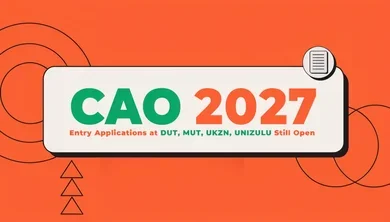
The application period for the 2027 academic year commences in early 2026, with many universities opening their portals in April or May. For example, the University of Cape Town (UCT), Stellenbosch University, the University of Johannesburg (UJ), Nelson Mandela University (NMU), Rhodes University, and the University of the Western Cape (UWC) all opened applications on 1 April 2026. The Cape Peninsula University of Technology (CPUT) opened on 11 May 2026, while the University of KwaZulu-Natal (UKZN) began accepting applications via the Central Applications Office (CAO) as early as 1 March 2026.
Important Deadlines:
- 30 June 2026: This is the critical closing date for highly competitive programmes such as Medicine, Pharmacy, Radiography, and Nursing at NMU and UKZN.
- 31 July 2026: UCT closes applications for all undergraduate programmes. Stellenbosch University also closes for undergraduate studies and residence applications on this date. No late applications are accepted by these institutions on this date.
- 31 August 2026: CPUT has this deadline for general applications and non-South African applicants. UWC requires applications for Dentistry and Oral Health by this date.
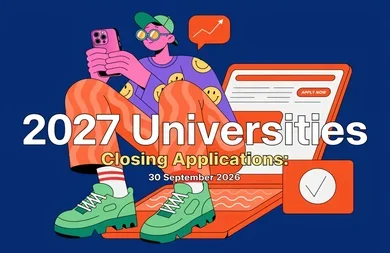
- 30 September 2026: This is a significant deadline for NMU (most undergraduate programmes, international students, and housing), Rhodes University (undergraduate applications), UWC (general applications), CPUT (late applications for SA applicants, subject to capacity), and UKZN (all other undergraduate programmes). It is also the on-time application deadline for the CAO.
- 31 October 2026: UJ accepts applications for all undergraduate curricular qualifications until this date.
Don't forget that NSFAS applications, crucial for financial aid, typically open between September 2026 and January 2027 for the following academic year.
Understanding Your Admission Point Score (APS)
The Admission Point Score (APS) is a standardized system used by most South African universities to evaluate your academic performance. Your APS is calculated from your National Senior Certificate (NSC) results, usually by taking your six best subject scores, with Life Orientation typically excluded from the calculation. Each university and specific programme has a minimum APS requirement, and more competitive courses demand higher scores.
For instance, a standard bachelor's degree might require an APS of around 24, while sought-after programmes like Engineering, Law, or Health Sciences often require an APS of 30 or higher. The maximum APS achievable is generally 42. While achieving the minimum APS is necessary, it does not guarantee acceptance, as admission is often based on a combination of factors and the overall applicant pool.
Essential Documents for Your University Application
To ensure a smooth application process, gather these essential certified documents:
- Identification: A certified copy of your South African ID document or passport (for international students).
- Academic Records: Certified copies of your Grade 11 final report and/or your latest Grade 12 results. If applying based on previous matric results, certified copies of those are needed.
- Transfer Students: If you have prior tertiary study experience, you will need to provide certified copies of your academic transcripts and a certificate of conduct from your previous institution.
- International Qualifications: A SAQA (South African Qualifications Authority) evaluation certificate is required for international qualifications.
- Additional Requirements: Be aware that some specialised programmes may request portfolios, specific subject prerequisites, or results from assessments like the National Benchmark Tests (NBT). Always check the specific requirements for your chosen course.
Loading ad...
Application Fees and Important Considerations
Many South African universities offer free online applications, including UJ, UWC, NMU, and CPUT. However, some institutions do charge application fees. For example, Rhodes University and Stellenbosch University charge R100 for South African citizens, while the CAO charges R250 for on-time applications and R470 for late applications from SA citizens. International students applying through CAO can expect fees of R300 for on-time applications and R580 for late applications.
It is crucial to note that application fees are generally non-refundable. Furthermore, meeting the minimum entry requirements does not guarantee admission. Deadlines are strictly enforced, so ensure your application is submitted well before the closing dates. [VERIFY: Information regarding specific application fees for universities other than those mentioned requires direct verification on each institution's official website, as these details can change annually.]
Successfully applying for undergraduate studies in 2027 hinges on meticulous planning and timely action. By familiarizing yourself with the opening and closing dates for your preferred universities and programmes, understanding the APS calculation, and preparing all necessary certified documents in advance, you can significantly streamline the process. Given the competitive nature of university admissions, submitting your applications early is strongly advised.
Always refer to the official websites of universities and the CAO for the most accurate and up-to-date information, as details regarding fees, dates, and requirements can be subject to change. Staying organised and informed will empower you to navigate the application journey with confidence and move closer to achieving your higher education aspirations.
Ready to start your application journey? Visit our comprehensive university list to find direct links to apply!