South Africa’s universities have officially opened their doors for 2027 applications, setting the stage for what is expected to be one of the most competitive admission cycles yet. With a record-breaking matric class behind them and growing demand for higher education, prospective students are being urged to apply early and ensure their documentation is in order.
The announcement comes on the heels of the historic 88% National Senior Certificate (NSC) pass rate achieved by the Class of 2025 — the highest in the country’s history. According to the Department of Basic Education, more than 900,000 candidates sat for the exams, making it the largest cohort to write matric in South Africa.
Basic Education Minister Siviwe Gwarube described the 88% pass rate as a milestone for the sector, noting it represented a 0.7 percentage point increase from the previous year. The provincial breakdown shows consistently strong performances across the country, with KwaZulu-Natal leading at 90.6%, followed by the Free State at 89.33% and Gauteng at 89.06%.
However, while the official pass rate paints a picture of progress, some analysts argue that the broader throughput picture tells a more complex story. A recent report highlighted that of the 1.25 million learners who began Grade 1 in 2014, just 684,640 passed matric in 2025. This statistic underscores the pressure on universities to accommodate not only a growing number of successful candidates but also a system grappling with retention challenges.
Growing Demand, Limited Space
Each year, South Africa’s 26 public universities receive far more applications than available spaces. With more than 656,000 learners passing matric in 2025 alone, competition for limited seats in high-demand programmes such as Medicine, Law, Engineering, and Commerce is expected to intensify.
Education experts have long warned that rising pass rates do not automatically translate into increased university capacity. Infrastructure constraints, funding limitations, and staff shortages remain significant barriers within the higher education system.
At the same time, the proportion of learners qualifying for bachelor’s degree studies remains critical. In the 2025 cohort, 46% of passes qualified at bachelor level, 28% at diploma level, and 13.5% at higher certificate level. These distinctions matter significantly during university admissions, where programme-specific requirements often exceed minimum NSC standards.
Universities Currently Open for 2027
Several major institutions have already confirmed that their 2027 application windows are now active. These include:
-
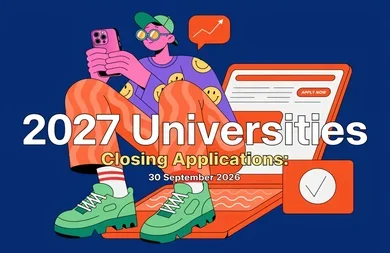
University of the Witwatersrand - Closing Date: 30 September 2026
-
University of KwaZulu-Natal - Closing Date: 30 September 2026
-
University of Zululand - Closing Date: 30 September 2026
-
Durban University of Technology - Closing Date: 30 September 2026
-
Mangosuthu University of Technology - Closing Date: 30 September 2026
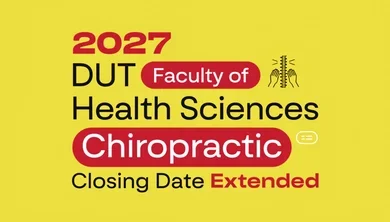
Prospective students are encouraged to visit each institution’s official website to review programme requirements, application fees, and closing dates. Some universities close applications for specific faculties as early as June or July, particularly for health sciences programmes.
Early Applications and Smart Choices
Universities traditionally encourage early applications, particularly for competitive programmes and residences. Prospective students are advised to carefully review faculty requirements, closing dates, and supporting documentation requirements.
Research into higher education throughput in South Africa has consistently shown that field of study and socio-economic factors play a significant role in student success and completion rates. This highlights the importance of making informed course choices aligned with academic strengths and long-term career prospects.
Admissions experts also caution against applying to only one institution. Given the volume of applicants and limited spaces, learners are encouraged to submit multiple applications where financially possible and to consider a mix of universities, including comprehensive institutions and universities of technology.
The Bigger Picture
The opening of 2027 applications marks more than just an administrative milestone; it reflects South Africa’s ongoing struggle to balance access with quality. While the record 88% pass rate demonstrates improvement in basic education outcomes, ongoing debates about retention, dropout rates, and learning quality continue to shape the national conversation.
For thousands of learners across Gauteng, KwaZulu-Natal, the Free State, and beyond, the next few months will determine their academic futures. The message from education authorities remains clear: apply early, meet the requirements, and make informed decisions.
As the 2027 university application season gathers momentum, one reality stands out — higher education remains one of the most powerful pathways to social mobility in South Africa. But securing a place requires preparation, strategy, and timely action.
With demand rising and competition tightening, the race for 2027 has officially begun.