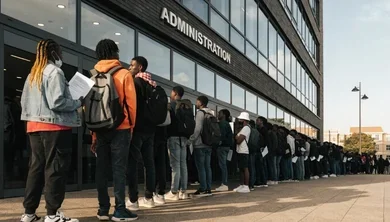
March 2026 was a turbulent period for students at the Durban University of Technology (DUT) as widespread protests erupted over critical delays in National Student Financial Aid Scheme (NSFAS) allowance payments. These disruptions left thousands of students in precarious financial situations, struggling to cover essential living costs and forcing the university to take drastic measures, including evacuating students from test venues. The escalating unrest highlighted the significant impact of NSFAS payment delays on student well-being and academic continuity.
Understanding the NSFAS Crisis: Why DUT Students Protested
The heart of the March 2026 unrest at DUT lay in the substantial delays students experienced in receiving their NSFAS allowances. For a vast majority of students, these funds are not a luxury but a necessity, essential for covering accommodation, food, transportation, and learning materials. The absence of these timely payments created immense financial pressure, directly jeopardizing their ability to attend classes and complete their academic work.
NSFAS is designed to provide a comprehensive financial support system for eligible students, covering tuition fees and a range of essential living expenses. In 2026, these allowances included capped accommodation costs (R60,500 annually), living expenses (up to R16,500 annually), and learning materials (up to R6,000 annually). The scheme also offers the 'Missing Middle' loan, assisting students whose families fall between NSFAS income thresholds and affordability. The failure to disburse these funds as scheduled led to widespread anxiety and frustration among the student body.
Campus Disruption and University Response
The protests, which intensified around March 19-20, 2026, led to significant disruptions across DUT campuses. In response to safety concerns and the escalating situation, DUT took decisive action. The university secured a high court interdict to manage the protests and increased the presence of law enforcement on campus to ensure the safety of all individuals.
To mitigate further academic disruption and ensure the continuity of learning for unaffected students, DUT made the decision to transition certain classes to an online format. Furthermore, the university initiated disciplinary proceedings against students identified as engaging in violent conduct, emphasizing its commitment to maintaining a safe and orderly learning environment.
DUT's Efforts to Resolve Payment Issues
DUT management worked diligently to address the immediate crisis. By March 20, 2026, the university reported that payments had been successfully processed for a substantial number of students, benefiting 5,862 individuals with learning material and living allowance disbursements. This was a significant step towards alleviating the immediate financial strain on many students.
Despite this progress, approximately 700 students continued to experience payment difficulties. These persistent issues were often traced back to administrative challenges, including the submission of incorrect banking details, discrepancies in student identification or surname information compared to NSFAS records, or the failure to provide necessary banking particulars to NSFAS in the first place.
NSFAS Eligibility and Application Process
For prospective and current students seeking NSFAS funding in 2026, specific eligibility criteria were in place. Applicants needed to be South African citizens or permanent residents enrolled at a public university or TVET college. A key requirement was a household income not exceeding R350,000 per annum, with an increased threshold of R600,000 for students with documented disabilities. The NSFAS N+ rule also applies, meaning students are funded for the duration of their qualification (N years) plus up to two additional years (N+2).
Successful applications hinge on the timely submission of all required documentation. Typically, this includes a certified copy of the applicant's South African ID, proof of income for the household, and signed consent forms. For students who have been rejected, the NSFAS appeal process allows for submissions within 30 days of receiving the outcome, requiring a clear written motivation and supporting evidence.
Key NSFAS Dates and Deadlines
Prospective students should be aware of the critical application timelines. The application cycle for NSFAS in 2025 closed on December 15, 2024. For the subsequent year, the 2026 NSFAS application window opened on September 15, 2025, and concluded on November 15, 2025. Students facing urgent payment issues, like those in March 2026, were advised to update their banking details promptly. For instance, a midday deadline on March 20, 2026, was set for updates to be included in a payment batch scheduled for March 24, 2026.
The NSFAS payment delays experienced by DUT students in March 2026 underscored the critical role of timely financial aid in enabling access to higher education for many South African youth. While DUT took significant steps to manage the crisis, process payments, and restore order, the challenges faced by the remaining 700 students highlighted the persistent need for robust administrative processes and accurate data management between students, institutions, and NSFAS itself.
Maintaining up-to-date personal and banking information on the MyNSFAS portal is paramount for students to avoid similar disruptions. Continuous communication and collaboration among all stakeholders are essential to navigate the complexities of the financial aid system and ensure that deserving students receive the support they need to succeed academically.