If you’re planning to study at a TVET (Technical and Vocational Education and Training) college in South Africa in 2026 and want financial support from NSFAS (National Student Financial Aid Scheme), one of the most important things you need to know is which NCV (National Certificate Vocational) programmes are funded by NSFAS.
What Are NC(V) Programmes?
National Certificate (Vocational) programmes are three-year vocational qualifications designed to prepare students for work or further study. These courses focus on practical skills paired with theory, making them ideal for learners who want hands-on experience in specific fields while obtaining a recognised certificate.
NC(V) qualifications are vocationally oriented, practical courses offered at NQF Levels 2, 3, and 4 that help students develop skills for the workplace while also gaining a recognised credential.
NSFAS funds eligible students who enrol in these NC(V) programmes at accredited public TVET colleges, provided you meet both financial eligibility criteria and academic admission requirements.
Why Choose an NC(V) Programme?
Before diving into the list, here’s why NC(V) studies are a great option:
Career-oriented training: These programmes are linked directly to workplace skills in high-demand sectors.
Practical focus: You gain real skills that employers value.
NSFAS support available: Covering tuition, textbooks, allowances, and more for qualifying students.
Pathway to further study: After completing NC(V), you can progress to other higher certificates, diplomas, or specialised training.
List of NSFAS-Funded NCV Programmes Available in 2026
- Civil Engineering and Building Construction (NCV L2–L4)
- Electrical Infrastructure Construction (NCV L2–L4)
- Engineering and Related Design (NCV L2–L4)
- Finance, Economics & Accounting (NCV L2–L4)
- Office Administration (NCV L2–L4)
- Generic Management / Management (NCV L2–L4)
- Marketing (NCV L2–L4)
- Information Technology & Computer Science (NCV L2–L4)
- Hospitality (NCV L2–L4)
- Tourism / Travel & Tourism (NCV L2–L4)
- Education and Development (NCV L2–L4)
- Primary Health (NCV L2–L4)
- Transport and Logistics (NCV L2–L4)
- Safety in Society (NCV L2–L4)
Breakdown of NSFAS Funded Courses
Here’s a detailed breakdown of the NC(V) programmes that NSFAS funds at TVET colleges for the 2026 intake. Keep in mind that availability can vary by college, and you should always check the college prospectus or speak with the financial aid office for the most current offerings.
1. Engineering & Technical Fields
These programmes equip learners with technical skills to work in construction, electrical systems, mechanical trades, and related industries:
Civil Engineering and Building Construction (NCV L2–L4)
Focus: Structural design, construction principles, and building site skills.
Electrical Infrastructure Construction (NCV L2–L4)
Focus: Basics of electrical systems, installation, wiring, and infrastructure work.
Engineering and Related Design (NCV L2–L4)
Focus: Technical drawing, design principles, problem-solving and engineering concepts.
2. Business, Finance & Administration
Ideal for learners who want to enter the corporate world or start their own ventures:
Finance, Economics & Accounting (NCV L2–L4)
Focus: Financial literacy, bookkeeping, accounting principles, and economics basics.
Office Administration (NCV L2–L4)
Focus: Administrative support, organisational skills, and office systems.
Generic Management / Management (NCV L2–L4)
Focus: Leadership fundamentals, management theory, and business operations.
Marketing (NCV L2–L4)
Focus: Marketing principles, promotions, and market research.
3. Information Technology & Communication
Perfect for students interested in tech careers:
Information Technology & Computer Science (NCV L2–L4)
Focus: IT fundamentals, computer skills, hardware basics, and software applications.
4. Hospitality, Tourism & Service Industries
For learners who thrive in customer-facing and service roles:
Hospitality (NCV L2–L4)
Focus: Food service, hotel operations, event planning basics.
Tourism / Travel & Tourism (NCV L2–L4)
Focus: Tourism industry skills, travel services, customer relations.
5. Education & Primary Health
Build skills in community-focused sectors:
Education and Development (NCV L2–L4)
Focus: Foundational teaching skills, educational support methods.
Primary Health (NCV L2–L4)
Focus: Basic health principles and community health support roles.
6. Transport & Logistics
A crucial industry with rising demand:
Transport and Logistics (NCV L2–L4)
Focus: Transport operations, logistics planning, supply chain basics.
7. Safety & Society
For learners drawn to public safety roles:
Safety in Society (NCV L2–L4)
Focus: Community safety principles, social services support.
Admission & Entry Requirements
To qualify for these NC(V) programmes:
- You must have completed Grade 9 or higher (depending on the level of the NCV course).
- You must apply to a public TVET college that offers the NC(V) qualification.
- You must meet NSFAS’s financial eligibility criteria (including household income requirements and documentation) to receive funding.
How to Apply for NSFAS Funding
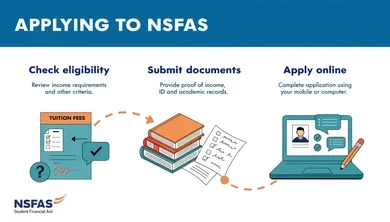
Applying for NSFAS funding for an NC(V) programme is straightforward if you follow these steps:
- Check Eligibility: Confirm you meet academic and financial requirements.
- Visit the NSFAS Portal: Go to the official NSFAS website to complete your application and upload required documents.
- Select Your Course: Choose an NC(V) programme at a public TVET college.
- Submit Before Deadline: Keep an eye on application deadlines, which are around August to October for the following year.
- Track Your Status: You’ll receive updates on your status through the NSFAS portal once submitted.
Tip: Colleges sometimes require that you also apply separately for admission into the NC(V) programme in addition to NSFAS funding. Always check the college’s application process.
Conclusion
Choosing the right course is one of the most important decisions you’ll make for your future. If you’re planning to pursue vocational education, NSFAS-funded NC(V) programmes in 2026 offer a solid pathway to developing practical skills and launching a career — without the financial burden.
From engineering to business, IT, hospitality, and education, there are multiple funded NC(V) options designed to suit diverse interests and career goals. Make sure to research the programme details at your chosen college and apply early to increase your chances of success.