Navigating the landscape of student financial aid in South Africa can be complex, especially for those pursuing vocational qualifications at TVET colleges. The National Student Financial Aid Scheme (NSFAS) plays a pivotal role in making education accessible. If you're considering a NATED programme at a TVET college in 2026, a crucial question likely on your mind is: how long will NSFAS fund my studies?
This comprehensive guide will break down the NSFAS funding duration for NATED students, detail the allowances you can expect, compare TVET funding to university support, and provide essential insights to help you plan your academic journey effectively for the 2026 academic year.
Understanding NSFAS and TVET NATED Programmes
Before delving into funding specifics, it's important to understand the entities involved. NSFAS is a South African government entity providing financial aid to eligible students at public universities and TVET colleges. Its mission is to ensure that no deserving student is denied access to higher education due to financial constraints. The scheme covers tuition, accommodation, transport, living, and learning material allowances for qualifying students.
TVET Colleges (Technical and Vocational Education and Training) are key institutions in South Africa's post-school education system, offering practical, occupationally-directed programmes. Among these, the NATED (National Accredited Technical Education Diploma) programmes are highly sought after. These programmes are structured into N4, N5, and N6 certificate levels, each typically lasting a semester (approximately 6 months) of theoretical study, followed by 18-24 months of practical work experience (P1 and P2) required to obtain the National Diploma.
The vocational nature of NATED courses means they are designed to equip students with specific skills directly applicable to various industries, making them a vital pathway for many seeking employment opportunities.
NSFAS Funding Duration for TVET NATED Levels in 2026
For TVET NATED students, NSFAS funding in 2026 is specifically allocated per N-level of study. Unlike university degrees which are funded for their full duration (e.g., three or four years), NATED programmes are modular. Here’s a breakdown:
- N4, N5, and N6 Certificates: NSFAS generally funds each N-level certificate (N4, N5, and N6) for the duration of its academic instruction. Each level typically involves approximately six months of contact learning. This means a student pursuing all three levels (N4, N5, N6) could potentially receive funding for three separate six-month periods of academic study.
- Practical Work Experience (P1 & P2): It is crucial to note that NSFAS primarily funds the academic, contact learning phases of the NATED programme. The subsequent 18-24 months of practical work experience (P1 and P2), which is mandatory to obtain the National Diploma, is generally not funded directly by NSFAS. Students are expected to secure their own workplace integrated learning opportunities and may or may not receive a stipend from their employers during this period. Therefore, while the full journey to a National Diploma takes approximately 3-4 years (1.5 years academic + 1.5-2 years practical), NSFAS funding covers only the academic component.
Students must maintain academic progression to continue receiving funding for subsequent N-levels. This policy is expected to remain consistent for the 2026 academic year, emphasizing academic performance as a key determinant for continued support.
NSFAS Allowances for TVET NATED Students in 2026
NSFAS provides comprehensive allowances designed to cover various student needs beyond just tuition fees. While specific amounts are subject to annual review and announcement, the categories of allowances for TVET NATED students in 2026 are anticipated to include:
- Accommodation Allowance: For students residing in NSFAS-approved private accommodation or college-managed residences. The amount varies based on the institution and geographical location. Students not in accredited accommodation may receive an alternative allowance for private accommodation, often capped.
- Transport Allowance: For students who commute to college daily and do not receive accommodation allowances. This allowance helps cover daily travel costs.
- Living Allowance: This allowance is designed to cover daily living expenses such as food and personal care items. It's a crucial support for students, ensuring they have resources for their well-being.
- Learning Material Allowance (Book Allowance): Provided annually to assist students with purchasing prescribed textbooks, stationery, and other necessary learning materials. This is typically a once-off payment at the beginning of the academic year.
The National Student Financial Aid Scheme aims to disburse these allowances efficiently, often through direct payments to students via their bank accounts or through approved payment service providers like Fundi, ensuring students have direct access to their funds for necessary expenses.
Comparing TVET NATED Funding with University Funding
While both TVET colleges and universities receive NSFAS funding, there are key distinctions in how the funding is structured, primarily due to the different nature of the programmes offered:
- Duration of Funding: For universities, NSFAS typically funds the entire standard duration of an undergraduate degree or diploma (e.g., 3 years for a Bachelor's degree, 4 years for B.Eng). This means if a degree is designed to be completed in three years, NSFAS will fund those three academic years, provided the student meets academic progression requirements. For TVET NATED programmes, as discussed, funding is primarily per academic N-level (six months), covering the theoretical components.
- Programme Structure: University degrees are often longer, comprehensive programmes leading to a qualification that can open doors to various career paths or further postgraduate study. TVET NATED programmes are shorter, more focused, and career-specific, designed for rapid entry into the workforce.
- Practical Component Funding: A significant difference lies in the funding of practical components. While some university programmes might have practicals integrated and funded within the degree structure, the mandatory 18-24 month practical component for NATED Diplomas is generally outside of direct NSFAS funding.
- Allowance Amounts: While the categories of allowances are similar, the specific amounts for accommodation, transport, and living allowances may differ between university and TVET students, reflecting varying costs of living and institutional structures. NSFAS regularly reviews these amounts to ensure they remain relevant.
Understanding these differences is vital for prospective students to make informed decisions about their educational path and financial planning.
Eligibility Criteria and Application Process for 2026
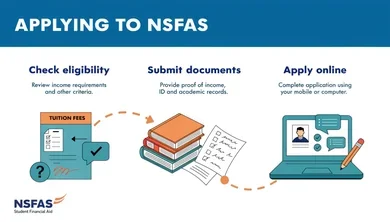
To qualify for NSFAS funding for NATED programmes in 2026, prospective students must meet specific eligibility criteria:
- South African Citizenship: Applicants must be South African citizens.
- Financial Need: Your household income must not exceed R350,000 per annum (R600,000 for students with disabilities).
- Academic Admission: You must be admitted or provisionally admitted to a public TVET college for a NATED programme.
- First-time entering student or returning student: Specific rules apply based on whether you're a new applicant or continuing your studies with NSFAS funding.
The application process for NSFAS is typically conducted online via the NSFAS student portal. Key steps usually involve:
- Creating an Account: Register on the NSFAS website.
- Submitting an Application: Complete the online application form with personal, academic, and financial details.
- Uploading Supporting Documents: This includes certified copies of your ID, parents'/guardians' IDs, proof of income, and consent forms.
- Monitoring Application Status: Regularly check the portal for updates on your application status.
It is crucial to apply within the specified application window, which usually opens in the latter part of the year for the following academic year (e.g., August-November 2025 for the 2026 academic year). Late applications are rarely considered, so early submission is highly recommended.
Maximising Your NSFAS Funding Experience
Securing NSFAS funding is a significant achievement, but managing it effectively is equally important. Here are some tips for NATED students:
- Understand Your Funding Letter: Always read your NSFAS approval letter thoroughly. It outlines what you are funded for and the conditions.
- Prioritise Academics: Maintaining good academic standing is paramount. Failure to progress can lead to the termination of funding. NSFAS requires students to pass a certain percentage of their modules to continue funding for subsequent levels.
- Budget Wisely: Your living and transport allowances are for essential expenses. Create a budget to manage your funds effectively throughout the semester.
- Communicate with Your College: Stay in touch with your TVET college’s financial aid office. They can provide guidance on NSFAS policies, disbursement dates, and support services.
- Report Changes: If there are any significant changes to your financial situation or academic status, inform NSFAS promptly.
- Plan for the Practical Component: Start looking for workplace integrated learning opportunities early. Network, attend career fairs, and utilise your college's placement services to secure your P1 and P2 training, as this crucial phase is generally not funded by NSFAS.
By being proactive and informed, you can make the most of your NSFAS support and focus on successfully completing your NATED programme.
The National Student Financial Aid Scheme remains a cornerstone of access to education in South Africa, providing invaluable support for TVET NATED students. For the 2026 academic year, it's clear that NSFAS will continue to fund the critical academic phases of NATED N4, N5, and N6 certificates, typically for six months per level.
While the practical component (P1 and P2) falls outside direct NSFAS funding, understanding this distinction, coupled with proactive planning for allowances and application processes, will empower you to navigate your vocational journey successfully. Armed with this knowledge, you are better prepared to embark on a fulfilling and skill-driven career path through TVET education.