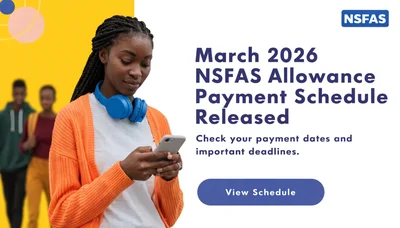
March marks a crucial period for countless South African students relying on financial support from the National Student Financial Aid Scheme (NSFAS). As the academic year gains momentum, knowing exactly when to expect your allowances is paramount for budgeting and peace of mind. This comprehensive guide provides everything you need to know about the NSFAS payment dates for March 2026, covering universities and TVET colleges, payment methods, potential delays, and crucial steps to take if your funds are late.
We understand the anxiety that comes with awaiting financial aid, and our aim is to equip you with the most accurate and actionable information to navigate your NSFAS disbursements effectively. Let's delve into the official payment schedule and ensure you're well-prepared for the month ahead.
Understanding the NSFAS Payment Cycle for 2026
The National Student Financial Aid Scheme (NSFAS) is dedicated to providing financial aid to eligible South African students pursuing higher education. While NSFAS strives for consistency, payment dates can vary slightly depending on the institution (university or TVET college) and the specific allowance being disbursed. Payments are generally processed on a monthly basis, covering various components such as tuition, accommodation, living, learning materials, and transport.
It's important to remember that NSFAS typically disburses funds directly to institutions for tuition and, in some cases, accommodation, while other allowances are paid directly to students. For March 2026, the payment cycle will follow established protocols, but students are always advised to monitor official communications from NSFAS and their respective institutions.
Official NSFAS March 2026 Payment Dates for Universities
For university students, NSFAS payments for March 2026 are generally expected to commence within the first two weeks of the month. However, the exact date can differ based on your specific university's financial aid department and its administrative processes. Universities receive bulk payments from NSFAS and then disburse the individual allowances to students.
- Expected Period: Payments for living, learning materials, and transport allowances are typically processed between the 1st and the 15th of March 2026.
- Tuition & Accommodation: These are often paid directly to the university by NSFAS, or disbursed by the university after receiving the funds. Students residing in university-accredited accommodation may see their accommodation allowance paid directly to their landlord or deducted from their overall allowance by the institution.
Key Action: Always verify the specific disbursement schedule with your university's financial aid office or student accounts department. Keep an eye on your student portal and official university announcements.
Official NSFAS March 2026 Payment Dates for TVET Colleges
TVET college students also rely heavily on NSFAS for their monthly allowances. Similar to universities, the March 2026 payment schedule for TVET colleges is anticipated to fall within the first two to three weeks of the month. TVET colleges often have a slightly different disbursement timeline compared to universities, sometimes taking a few extra days for processing.
- Expected Period: Living, personal care, and transport allowances for TVET students are generally expected between the 5th and the 20th of March 2026.
- Institutional Dependent: The exact date largely depends on when your specific TVET college processes the funds after receiving them from NSFAS.
Key Action: Regularly check your TVET college's student portal, notice boards, and communicate directly with your financial aid administrator for the precise March 2026 payment dates relevant to your institution.
How NSFAS Payments Are Disbursed to Students
NSFAS employs several methods to ensure allowances reach students efficiently:
- NSFAS Bank Account (Direct Deposit): The most common method. Students are required to provide valid bank account details linked to their NSFAS profile. Payments are then deposited directly into this account. Ensure your bank details are correct and up-to-date on the NSFAS portal.
- NSFAS Wallet (Previously): While the NSFAS Wallet system has largely been phased out for direct bank deposits or through institutions for many students, some historic cases or specific partnerships might still utilize it. Always confirm the current payment method applicable to your situation.
- Through Institutions: Some universities and TVET colleges manage the disbursement of certain allowances (especially for accommodation or sometimes living allowances) directly to students after receiving bulk funds from NSFAS. This means the institution acts as an intermediary.
It's crucial to ensure your personal details, particularly your bank account information, are accurately reflected on your NSFAS profile to prevent any payment delays.
Common Factors Affecting NSFAS Payment Timing
While NSFAS aims for timely disbursements, several factors can influence when your allowance lands in your account:
- Registration Status: You must be officially registered for the 2026 academic year at your institution for your allowances to be released. Any hold on your registration will delay payments.
- Data Verification: NSFAS conducts continuous verification of student data. Discrepancies in personal details, bank accounts, or academic records can halt payments.
- Outstanding Documents: If you have any outstanding supporting documents required by NSFAS or your institution, your payments will be on hold until these are submitted and approved.
- Appeals Process: If you recently underwent an appeal process, payments might be delayed until your appeal is fully processed and approved.
- Public Holidays: Payments are not processed on weekends or public holidays. If a payment date falls on one of these, it will typically be processed on the next business day.
- Institutional Processing: The administrative efficiency of your university or TVET college can also play a role, as they often handle the final disbursement to students.
What to Do If Your March 2026 Payment is Delayed
Experiencing a payment delay can be frustrating, but there are clear steps you can take:
- Check Your NSFAS Portal: Log in to your myNSFAS account regularly. The portal provides real-time updates on your funding status, payment dates, and any outstanding requirements.
- Verify Bank Details: Double-check that your bank account details on your NSFAS profile are correct and match your personal information. Incorrect details are a primary cause of delays.
- Contact Your Institution's Financial Aid Office: This is often the quickest first point of contact. They can provide institution-specific updates and check if there are any holds on your student account.
- Contact NSFAS Directly: If your institution cannot assist, reach out to NSFAS through their official channels:
- Toll-Free Number: 08000 NSFAS (08000 67327)
- Email: info@nsfas.org.za
- Social Media: NSFAS frequently updates their official Facebook and X (formerly Twitter) pages.
- Review Outstanding Requirements: Ensure you have submitted all necessary documents and have no pending appeals or verification issues on your profile.
Remember to be patient and keep records of all your communication with NSFAS and your institution.
Navigating the NSFAS payment schedule can sometimes feel complex, but with the right information and proactive steps, you can ensure a smoother experience. For March 2026, university and TVET college students should anticipate their allowances within the first two to three weeks of the month, with exact dates varying by institution. Always prioritise verifying your details on the NSFAS portal and communicating directly with your institution's financial aid office for the most accurate and up-to-date information.
By staying informed and acting swiftly on any discrepancies or delays, you can focus on your studies without the added stress of financial uncertainty. NSFAS remains a vital lifeline for countless students, and understanding its processes is key to maximising your educational journey in South Africa.