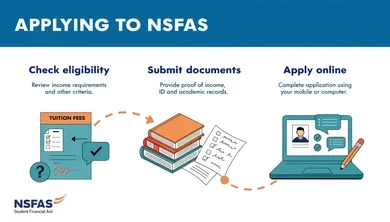
Securing an education in South Africa is a pivotal step towards a brighter future, and for many, the National Student Financial Aid Scheme (NSFAS) is the lifeline that makes this possible. Beyond tuition fees, NSFAS plays a crucial role in covering essential living costs, specifically transport and accommodation. As we look towards the 2026 academic year, understanding the eligibility criteria and application processes for these vital allowances is paramount. This comprehensive guide aims to demystify the NSFAS transport and accommodation benefits, ensuring aspiring students are well-prepared to access the support they need.
Understanding NSFAS Allowances in 2026
The National Student Financial Aid Scheme (NSFAS) is a South African government entity that provides financial aid to eligible students at public universities and TVET colleges. Its core mission is to ensure that financially disadvantaged students have access to higher education opportunities. While NSFAS is renowned for covering tuition fees, its comprehensive support extends to various allowances designed to alleviate the financial burden on students. For the 2026 academic year, these allowances, particularly for transport and accommodation, will continue to be a cornerstone of student support, subject to slight adjustments based on inflation and policy reviews. It's crucial for applicants to grasp the nuances of these allowances to plan their academic journey effectively.
Eligibility Criteria for NSFAS Transport Allowance in 2026
The NSFAS transport allowance is designed to assist students who commute to their educational institutions daily. The primary goal is to ensure that the cost of travel does not become a barrier to accessing education. For the 2026 academic year, the eligibility for the transport allowance is expected to remain consistent with current policies, focusing on students who reside a certain distance from their campus.
- Distance Requirement: Students typically qualify for a transport allowance if they live within a specified radius of their campus but too far to walk comfortably and do not reside in NSFAS-funded or accredited accommodation. While exact distances may be adjusted, the general guideline often involves a minimum distance (e.g., within 10km but not within walking distance, or a distance that necessitates public transport).
- Commuter Status: This allowance is specifically for students who commute from their homes rather than residing in student accommodation.
- Means Test: As with all NSFAS funding, eligibility is dependent on the household income threshold, which is currently set at R350,000 per annum (or R600,000 for students with disabilities). This threshold is reviewed annually and may see minor adjustments for 2026.
- Payment Structure: The transport allowance is usually a fixed monthly amount paid directly to the student's bank account. This amount is intended to cover daily commuting costs via public transport. Students should budget carefully, as this allowance is a contribution and may not cover all transport expenses, especially if they rely on more expensive private transport options.
It is vital for applicants to accurately declare their residential status and commuting arrangements during the application process, as this information is subject to verification.
NSFAS Accommodation Allowances: On-Campus vs. Private Accommodation for 2026
Accommodation is often the largest non-tuition expense for students, and NSFAS provides crucial support in this area. The scheme differentiates between university-managed accommodation and privately-sourced accommodation.
University-Managed Accommodation
For students residing in university residences or university-accredited accommodation, NSFAS typically pays the accommodation fees directly to the institution. This streamlines the process and ensures that students' housing is secured without direct financial transactions from their side. Eligibility here is tied to being accepted into an institution's residence or accredited private accommodation.
Private Accommodation
Many students opt for private accommodation not managed or accredited by their university. For these students, NSFAS provides an accommodation allowance paid directly to them, with a maximum cap. For 2026, it is anticipated that these caps will be adjusted to reflect inflation and the rising cost of living, but students should be aware that:
- Maximum Limits: There is a predefined maximum annual amount that NSFAS will pay for private accommodation. This limit varies by institution and region, reflecting the differences in living costs across South Africa. Students securing accommodation above this cap will be responsible for the difference.
- Accreditation and Verification: NSFAS often requires private accommodation providers to be accredited by the university or, in some cases, directly by NSFAS, to ensure living standards are met. Students must ensure their chosen accommodation meets these criteria. The landlord's banking details and proof of lease agreement are typically required for verification.
- Payment Process: The accommodation allowance for private housing is usually disbursed monthly or quarterly into the student's bank account, who is then responsible for paying their landlord.
Addressing Outstanding Accommodation Fees
A common concern revolves around outstanding accommodation fees. NSFAS aims to cover current academic year fees. However, historical outstanding fees (from previous years where the student may not have been funded or was partially funded) are generally not covered by the current year's allowances. Students are advised to resolve any prior year's debts directly with their landlords or institutions. For the current year, once a student's funding is confirmed, NSFAS aims to ensure timely payments to prevent accrual of new debts, either directly to the institution or to the student for onward payment.
Laptop Provision Rumours and Learning Material Allowance in 2026
There has often been confusion and rumours regarding NSFAS providing laptops to all funded students. It is important to clarify this for the 2026 academic year. NSFAS does not typically provide physical laptops as a standard allowance to all students. Instead, they provide a 'Learning Material Allowance' (also sometimes referred to as 'Books and Stationery Allowance').
- Learning Material Allowance: This allowance is a lump sum paid to students at the beginning of the academic year. It is intended to cover the costs of textbooks, stationery, and other necessary learning tools, which may include a portion for data or even contributing towards a device if the student deems it necessary. The exact amount of this allowance is determined annually and is communicated by NSFAS.
- Device Pilot Projects: While a universal laptop provision isn't standard, NSFAS has previously run pilot projects or partnered with institutions for device provision. These are typically specific initiatives and not an across-the-board benefit. Students should check with their specific institution and the latest NSFAS announcements for any such projects in 2026.
- Verification: All allowances, including the learning material allowance, are subject to the same rigorous verification processes as tuition and living allowances. Students must ensure all their declared information is accurate and supported by valid documentation.
Therefore, while direct laptop provision is not a standard feature, the learning material allowance provides students with financial flexibility to acquire the resources they need for their studies.
Important Application Tips and Verification for 2026
Navigating the NSFAS application process requires diligence and attention to detail. For 2026, prospective students should adhere to the following tips to maximise their chances of securing funding:
- Apply Early: Always apply as soon as applications open. This allows ample time to gather documents and rectify any issues. NSFAS typically opens applications in September/October for the following academic year.
- Accurate Information: Ensure all personal and household financial information is accurate and up-to-date. Any discrepancies can lead to delays or rejection.
- Required Documents: Have all supporting documents ready, including certified copies of IDs (applicant and household members), proof of income (pay slips, affidavits for informal income, SASSA letters), parental consent forms (for minors), and proof of address.
- Banking Details: Ensure you have your own active South African bank account in your name. NSFAS generally does not pay into third-party accounts.
- Communication: Regularly check your NSFAS applicant portal, SMS, and email for updates and requests for additional information. Respond promptly to any queries.
- Verification Process: Be prepared for a robust verification process. NSFAS uses various methods to confirm the authenticity of applicant information, including data matching with other government databases (e.g., Home Affairs, SARS, SASSA). Misrepresentation of facts can lead to funding withdrawal and even legal action.
By following these guidelines, students can streamline their NSFAS application journey and focus on their academic pursuits.
Staying Informed: Key Dates and Resources for 2026
While specific dates for the 2026 academic year will be announced closer to the time, students must make it a habit to stay informed through official channels. The NSFAS website is the primary source of truth for all announcements, policy updates, application opening and closing dates, and appeal processes.
- Official NSFAS Website: Regularly visit www.nsfas.org.za for the latest information.
- Social Media: Follow NSFAS on their official social media platforms for real-time updates (e.g., X, Facebook).
- Institutional Financial Aid Offices: Your university or TVET college's financial aid office is an invaluable resource. They can provide guidance specific to your institution and assist with queries.
- NSFAS Contact Centre: For direct queries, students can contact the NSFAS contact centre, though response times can vary during peak periods.
Proactive engagement with these resources will ensure that you do not miss crucial deadlines or changes in policy that could impact your funding eligibility for transport and accommodation in 2026.
The National Student Financial Aid Scheme remains a beacon of hope for many South African students, bridging the gap between aspiration and achievement. Understanding the intricacies of its transport and accommodation allowances for the 2026 academic year is not just about securing funding; it's about gaining peace of mind and the freedom to focus entirely on your studies. By familiarising yourself with the eligibility criteria, payment mechanisms, and the crucial application and verification processes, you can confidently navigate your educational journey. Remember to always rely on official NSFAS communications and your institution's financial aid office for the most accurate and up-to-date information.