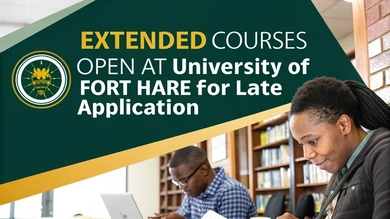
Extended curriculum programmes remain open for late applications at University of Fort Hare for the 2026 academic year. ECP are designed for those who do not yet meet the minimum requirements for mainstream degree programmes.
Extended curriculum programmes, commonly referred to as ECPs, are designed to support students who show academic potential but may need additional time and structured support to transition into university studies.
At UFH, these programmes are an integral part of the institution’s commitment to widening access to higher education, particularly for learners from under-resourced schooling backgrounds.
According to the university, the extended courses follow the same academic standards as mainstream degrees but are spread over a longer period, usually four years instead of the standard three.
This allows students to complete foundational modules in their first year, strengthening key academic skills such as reading, writing, quantitative literacy and discipline-specific concepts before progressing to higher-level coursework
Extended Courses Explained
Extended courses at UFH are undergraduate degree programmes with an additional foundational year built into the curriculum. This extra year is not a “repeat” of high school content but rather a carefully structured introduction to university-level learning.
Students enrolled in these programmes are fully registered UFH students and, upon completion, graduate with the same qualification as those in the mainstream stream.
These programmes are particularly beneficial for applicants who narrowly miss the admission point score (APS) for certain degrees or who come from schools where access to strong academic support was limited.
Research across South African universities has shown that extended programmes improve retention and success rates, especially in the first year of study.
Extended courses currently open for late application
UFH has indicated that these several extended programmes are still accepting late applications across its faculties:
BCom (Accounting) – Extended Course
BCom (Information Systems) – Extended Course
BCom (Industrial Psychology) – Extended Course
Bachelor of Science – Extended Course
BSc Agriculture – Extended Course
BSc Agriculture (Horticulture) – Extended Course
BSc Agriculture (Animal Production) – Extended Course
BSc Agriculture (Livestock and Pasture) – Extended Course
BSc Agriculture (Agricultural Economics) – Extended Course
BSc Agriculture (Agricultural Extension) – Extended Course
Bachelor of Agriculture – Extended Course
Who should consider applying?
Extended courses are ideal for first-time university applicants who meet the minimum entry requirements for admission to UFH but fall slightly short of the competitive cut-off points for mainstream programmes. They are also suitable for students who believe they would benefit from a more supportive and gradual introduction to university academics.
Importantly, applying for an extended programme does not mean lower academic expectations. Students are required to meet progression rules each year and must demonstrate commitment and consistent effort.
Many graduates who began their studies in extended programmes have gone on to complete postgraduate qualifications and establish successful careers.
Application process and deadlines
Late applications to UFH are submitted online through the university’s official application portal. Applicants must ensure that all required documents are uploaded, including certified copies of their identity document, latest academic results (Grade 11 final or Grade 12 results), and proof of application fee payment.
Deadline: Courses will close once they are full.
A pathway to academic success
The University of Fort Hare has a long-standing reputation for producing graduates who contribute meaningfully to South Africa’s social, economic and political landscape.
By keeping extended courses open for late application, the institution continues to provide access to higher education for students who may otherwise be excluded due to structural inequalities in the schooling system.