Navigating the National Student Financial Aid Scheme (NSFAS) can feel complex, especially when trying to understand specific application windows for different academic terms. For students planning their tertiary education journey in 2026, knowing when to apply is crucial for securing vital funding. NSFAS plays a pivotal role in South Africa, offering bursaries to eligible students to cover tuition, accommodation, and living costs at public universities and TVET colleges.
This guide aims to clarify the 2026 NSFAS application timelines, focusing on the general application cycle and potential dates for trimester and semester-based funding. Understanding these dates, alongside eligibility requirements and necessary documentation, will help ensure you don't miss out on this life-changing opportunity.
NSFAS 2026: Understanding the Application Cycles
The primary NSFAS application cycle for 2026 typically opens in the latter half of the preceding year. While exact dates can vary slightly, students generally expect the application portal to open around September to November 2025 and close by mid-November 2025 or potentially in January 2026. This main cycle is the most common period for students to apply for funding for the upcoming academic year.
NSFAS supports students in various institutional models, including those on semester and trimester systems. While the main application window covers most needs, there are often specific application periods that align with the start of second or third trimesters/semesters for certain courses or institutions. These later application windows are critical for students who may have missed the initial deadline or whose academic progression requires a later funding application.
Key NSFAS 2026 Application Dates: Trimester & Semester Funding
While the 2026 main application cycle aims to capture most applicants, NSFAS also provides opportunities for students who may need to apply for later academic terms. Based on previous patterns, here are the potential application windows for trimester and semester funding. Please note that these specific dates were not definitively confirmed for the main 2026 cycle in the research notes and should be treated as indicative. Always check the official NSFAS website for the most current information.
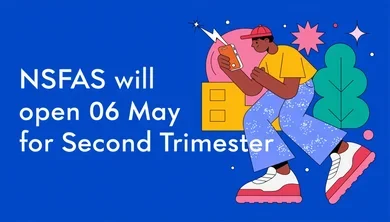
- Trimester 2 Window: Approximately 06 May 2026 – 18 May 2026
- Semester 2 Window: Approximately 01 July 2026 – 17 July 2026
- Trimester 3 Window: Approximately 03 September 2026 – 14 September 2026
It is essential for students to be vigilant and monitor the official NSFAS communication channels for precise announcements regarding these specific application periods.
Who Qualifies for NSFAS Funding in 2026?
NSFAS is designed to support South African citizens and permanent residents who come from low-income households. The primary eligibility criteria for 2026 funding include:
- A combined gross household income that does not exceed R350,000 per annum. For students living with disabilities, this threshold increases to R600,000 per annum.
- Acceptance or registration at a public university or TVET college.
- A successful Grade 12 pass for university studies or a Grade 9 pass and above for TVET college programmes.
Students who are recipients of a SASSA grant automatically qualify for NSFAS funding, simplifying the application process for them as proof of income is not required.
What Does NSFAS Cover in 2026?
NSFAS bursaries are comprehensive, aiming to alleviate financial burdens throughout a student's tertiary education. For 2026, estimated coverage includes:
- Full tuition and registration fees.
- Accommodation allowance, capped at R45,000 for university students and R33,000 for TVET college students.
- A monthly living allowance of R1,650.
- A learning material allowance of up to R5,200 per year.
- A personal care allowance of up to R2,900 per year.
- Additional allowances for students with disabilities.
It's important to note that NSFAS funding is a bursary and generally does not need to be repaid, provided academic conditions are met.
How to Apply for NSFAS 2026
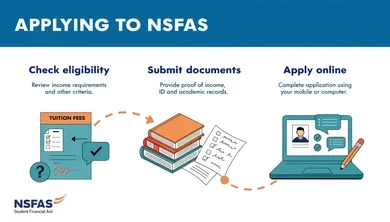
Applying for NSFAS is done online through the official myNSFAS portal. Here’s a simplified breakdown of the process:
- Create a myNSFAS Account: Visit the myNSFAS portal and register using your South African ID number.
- Complete the Application: Log in and navigate to the 'Apply' section. Fill in all required personal, academic, and household information accurately.
- Upload Documents: You will need to upload supporting documents. Key documents typically include certified copies of your ID, your parents'/guardians' IDs, and proof of income (payslips, employment letters, or affidavits not older than 3 months). SASSA recipients are exempt from providing income proof.
- Submit: Review all entered information and uploaded documents carefully before submitting your application.
Ensure all certified documents are clear and have recent certification stamps (not older than 3 months). For a comprehensive list of specific documents, refer to the NSFAS website or contact them directly.
Academic Progression and Ineligibility
To maintain NSFAS funding, continuing students are generally required to pass at least 60% of their enrolled modules or courses annually. Failing to meet this academic progression can lead to the withdrawal of funding. Furthermore, several factors can make an applicant ineligible for NSFAS, including studying at private institutions, having a household income that exceeds the specified thresholds, holding another full bursary or scholarship, pursuing a second undergraduate degree or certificate, or enrolling in unaccredited qualifications.
It is also important to note that while NSFAS funding does not have a specific APS score requirement, applicants must still meet the academic admission requirements set by the university or TVET college they are applying to.
Securing NSFAS funding for 2026 is a critical step for many South African students. While the main application window is the primary opportunity, being aware of potential later application dates for trimester and semester funding can provide a second chance for those who missed the initial deadline or whose academic schedules require it.
Always rely on official NSFAS channels for the most accurate and up-to-date information regarding application dates and requirements. By preparing your documents and understanding the process, you can increase your chances of receiving the financial support needed to pursue your educational goals.