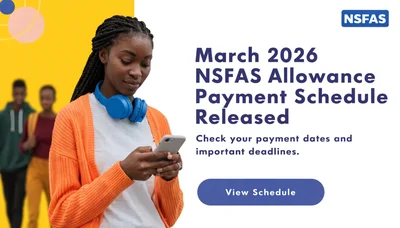
The National Student Financial Aid Scheme (NSFAS) plays a pivotal role in ensuring access to higher education for countless South African students. As we step into March 2026, the anticipation around allowance payments reaches its peak. NSFAS has officially released crucial information regarding the much-awaited March 2026 allowances, outlining everything from payment dates to specific amounts. This comprehensive guide will break down the latest announcement, helping students understand their financial support for the month ahead and navigate the necessary processes with ease.
Official NSFAS March 2026 Allowance Announcement: Key Dates
Students across universities and TVET colleges funded by NSFAS can breathe a collective sigh of relief. The National Student Financial Aid Scheme has confirmed the payment window for March 2026 allowances, ensuring beneficiaries are aware of when to expect their much-needed financial support. The official period for these disbursements commences on March 1, 2026, and is expected to conclude by March 31, 2026. While payments are processed throughout the month, students are advised to regularly check their NSFAS wallet or bank accounts, depending on their chosen payment method, for the exact date their funds reflect. This period allows for the staggering of payments to manage the large volume of transactions effectively across various institutions nationwide.
Detailed Breakdown of March 2026 Allowance Amounts
NSFAS allowances are structured to cover various essential student needs, including living expenses, learning materials, and transport. The specific amounts for March 2026 generally follow the established guidelines, though minor adjustments can occur annually based on inflation and government directives. Typically, allowances are categorised as follows:
- Living Allowance: This is the largest component, designed to cover daily expenses like food, toiletries, and other personal needs. For university students, this often includes a specific amount for accommodation if not living in university residences, or a dedicated accommodation allowance is paid directly to accredited landlords.
- Learning Material Allowance (Book Allowance): This allowance is usually disbursed once a year or per semester and is specifically for purchasing textbooks, stationery, and other study-related materials. While often a once-off payment, any remaining portions or specific monthly allocations might be processed.
- Transport Allowance: For students residing off-campus and commuting, a transport allowance helps mitigate daily travel costs. This amount varies based on the institution and geographic location.
- Accommodation Allowance: Paid either directly to university residences, accredited private accommodation providers, or to students who have opted for self-catering accommodation. The amount is determined by the cost of the accredited accommodation.
It is crucial for students to verify the exact amounts applicable to their specific institution and qualification level directly on their myNSFAS portal, as there can be slight variations.
Understanding the NSFAS Payment Schedule and Process
The NSFAS payment system has evolved over the years to enhance efficiency and transparency. For March 2026, students can expect payments to be processed either directly into their NSFAS Wallet accounts (primarily for TVET college students and some university students) or directly into their personal bank accounts (for many university students). Here's what you need to know:
- NSFAS Wallet: If you receive funds via the NSFAS Wallet, you will typically receive an SMS notification once the funds are available. You can then withdraw cash at participating retailers (e.g., Shoprite, Usave, Checkers, Boxer, Pick n Pay) or use the virtual card for cashless purchases.
- Bank Accounts: University students who have provided valid, South African bank accounts in their name can expect direct deposits. It's imperative that the bank account details linked to your myNSFAS profile are correct and verified to avoid payment delays.
Payments are not always instantaneous for everyone on the first day of the month. NSFAS processes millions of transactions, and it can take a few days for funds to reflect. Patience is key, but consistent monitoring of your account is advised during the March 1-31 payment window. Ensure your registration status at your institution is confirmed and submitted to NSFAS, as this is a prerequisite for allowance disbursements.
Crucial Banking Requirements for NSFAS Beneficiaries
To ensure a smooth and uninterrupted flow of your NSFAS allowances, particularly for those receiving direct bank deposits, adhering to strict banking requirements is paramount. Incorrect or unverified banking details are a leading cause of payment delays.
- Personal Bank Account: The bank account must be in the student's name. NSFAS does not make payments into third-party accounts.
- South African Bank: The account must be with a registered financial institution in South Africa.
- Active Account: Ensure your bank account is active and not dormant or frozen.
- Verification: NSFAS often requires bank account verification. You may be asked to upload proof of banking (e.g., a bank statement or a letter from the bank) to your myNSFAS portal.
- Timely Updates: If you change your bank account, it is critical to update your details on the myNSFAS portal immediately and follow the verification process. Failure to do so will result in payment delays.
For NSFAS Wallet users, while a traditional bank account isn't strictly necessary, ensuring your cellphone number linked to myNSFAS is active and correct is vital for receiving SMS notifications and accessing your funds.
What to Do If You Encounter Payment Issues
Despite NSFAS's best efforts, issues can sometimes arise. If your March 2026 allowance has not reflected by the end of the payment window or if you encounter any discrepancies, follow these steps:
- Check MyNSFAS Portal: Log in to your myNSFAS account to check your funding status and transaction history. Sometimes, the issue is clearly stated there.
- Verify Registration Status: Confirm with your institution's financial aid office that your registration data has been successfully submitted and approved by NSFAS.
- Review Banking Details: Double-check that your banking details on myNSFAS are absolutely correct and verified.
- Contact NSFAS: If all else fails, contact NSFAS directly through their contact centre (08000 NSFAS / 08000 67327) or social media channels. Provide them with your ID number and a clear explanation of your issue.
- Visit Your Institution's Financial Aid Office: Many universities and TVET colleges have dedicated staff who can assist students with NSFAS-related queries and mediate with NSFAS where necessary.
Remember to keep records of all communications and reference numbers.
Frequently Asked Questions (FAQs) About March Allowances
- Q: When exactly will my March 2026 allowance be paid?
A: Payments will be processed between March 1 and March 31, 2026. The exact date you receive yours depends on your institution and payment method. Keep an eye on your NSFAS Wallet SMS or bank account. - Q: Why is my allowance less than expected?
A: Allowances vary based on your institution, qualification, and whether you receive accommodation or transport. Check your funding letter on myNSFAS for a detailed breakdown. Also, ensure there are no outstanding issues or deductions from previous months. - Q: Can I use my NSFAS allowance for anything?
A: While the allowances are for specific purposes (living, learning materials, transport, accommodation), the living allowance provides flexibility for daily needs. It's crucial to budget wisely. - Q: My NSFAS Wallet is not working. What should I do?
A: Ensure your linked cell phone number is correct. If issues persist, contact NSFAS directly or visit your financial aid office for assistance. - Q: I changed my bank account. Will I still get paid?
A: Only if you have updated your details on the myNSFAS portal and they have been verified. Failure to update promptly will cause significant delays.
The Broader Impact: NSFAS and South African Higher Education
The consistent and timely disbursement of NSFAS allowances is not merely an administrative task; it is a critical lifeline for hundreds of thousands of South African students. These funds enable beneficiaries from disadvantaged backgrounds to pursue their academic dreams without the crushing burden of financial strain. The impact extends beyond individual students, contributing significantly to national development by fostering a more educated workforce and promoting social mobility. Every allowance payment, including the March 2026 disbursements, underscores the government's commitment to accessible education and the potential for a brighter future for the nation's youth. It allows students to focus on their studies, reduce dropout rates, and ultimately contribute to various sectors of the South African economy.
The announcement of NSFAS March 2026 allowances is a moment of relief and planning for many students. By understanding the payment dates, allowance structures, and banking requirements, beneficiaries can effectively manage their finances and ensure a smooth academic journey. We urge all NSFAS beneficiaries to stay informed by regularly checking the official NSFAS communication channels and their myNSFAS portal for the most accurate and up-to-date information. Your commitment to your studies, coupled with this vital financial support, is a powerful combination for success.